
Here is a thought experiment I want you to sit with for a moment.
Imagine you need surgery. Your surgeon walks in, introduces himself, and mentions that he has been doing this for twelve years. Now imagine that before he operates, every surgical decision he makes must be reviewed by a second, independent doctor with no financial relationship to the first, whose only job is to confirm that the proposed procedure is evidence-based, necessary, and correctly scoped.
Most people would find that reassuring rather than alarming. A second set of qualified eyes catching errors before they happen sounds like good medicine.
Now ask yourself why we do not apply the same logic to the people writing the laws that govern 335 million Americans.
What Actually Happens When Congress Drafts a Bill?
The process is less rigorous than most people assume. A legislator introduces a bill. It may have been drafted by their staff, by a think tank affiliated with their party, or in documented cases, by the lobbyists representing the industry the bill is supposed to regulate. It moves through committee, where amendments are added, sometimes by people who have not read the original text in full. Riders get attached. Cost projections are provided by the Congressional Budget Office, which does not evaluate whether the bill’s goals are achievable, only what the fiscal impact of the stated provisions will be.
Nobody with independent subject-matter expertise is required to confirm that the proposed law actually solves the problem it claims to address, that it represents the most cost-efficient available approach, or that it does not contain provisions that primarily benefit a specific donor constituency rather than the public.
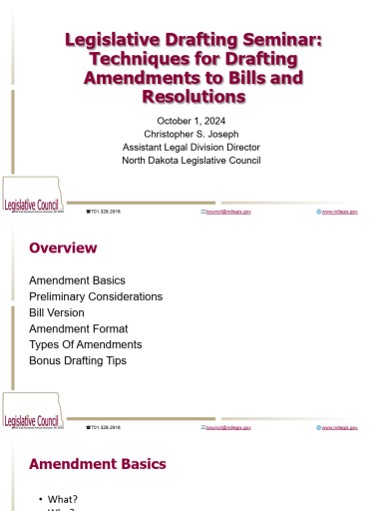
[Legislative drafting and bill review process documentation. Independent expert review is largely absent from the current system.]
That is the gap the Center Forward Party’s Central Apolitical Organization is designed to fill. The organization would not replace Congress. It would introduce the same independent review layer that we expect in medicine, engineering, and public accounting, into the one institution where its absence has been most costly.
Who Would Staff This Organization?
Two sources. Career civil servants with proven subject-matter expertise, people who already exist within the government and whose knowledge of how agencies and programs function is irreplaceable. And new hires recruited from academia, the private sector, and civic institutions, selected through a nonpartisan screening process with no political litmus test other than demonstrated competence.
No member could hold party office. No member could accept political donations. No member could engage in campaign activity of any kind. Their compensation would be set independently, and their tenure would be protected from political interference in the same way federal judges have tenure protection from the legislative branch.
The goal is to create an institution that thinks in decades, not election cycles. China has been operating with long-horizon planning bodies since the 1950s. The United States has never had a structural equivalent at the legislative level. The result is visible in every major policy domain: we react to crises we could have anticipated, we pass laws that solve yesterday’s problem and ignore tomorrow’s, and we leave entire categories of structural failure unaddressed because no election-cycle-dependent legislator has the incentive to touch them.
What Would the Review Actually Check?
Before a bill goes to the full floor vote, the Central Apolitical Organization would conduct a four-part assessment.
- Is the proposed solution actually matched to the stated problem, based on available evidence?
- Is it the most cost-efficient available approach, or are cheaper and equally effective options being bypassed?
- Does it contain any provisions, riders, or scope changes that appear to serve specific donor constituencies rather than the public?
- What does independent cost verification from the Government Accountability Office show about the true fiscal impact?
Any bill that fails one of these tests goes back. Not to a political committee. Back to the drafting body for revision before it can proceed. This is not a veto. Congress retains full authority to override the review process if it chooses. But that choice becomes a matter of public record, and voters can respond accordingly.
This approach is already in widespread use in other serious democracies. The United Kingdom has the Office for Budget Responsibility, an independent statutory body that scrutinizes fiscal projections before they become policy. Australia has a Parliamentary Budget Office that independently costs legislation before votes. The United States has the CBO, which is valuable but limited to fiscal scoring, not outcome evaluation or structural review.
The A Dynamic Department to Draft Bills to Submit to Congress for Approval post on this site goes into the specific structural logic in more detail, and I would encourage you to read it alongside this piece.
What About the Rider Problem?
![Independent expert review process for legislative drafting and amendments — a model for accountability without bureaucratic overreach.]
Congressional riders are the most direct mechanism through which donor interests get embedded into legislation that has nothing to do with those interests. A rider is a clause attached to a must-pass bill, often in the final hours before a vote, that redirects funding or changes regulatory conditions in ways that serve a specific constituency.
The documented fiscal impact of riders is significant. Government tracking puts the minimum annual cost at $27 billion, and that is only what has been identified. Under the Central Apolitical Organization framework, any rider proposed after the initial bill review must return through the same independent assessment process. It cannot bypass review by arriving late in the legislative calendar. The process applies every time the substance of a bill changes materially, regardless of when that change is proposed.
This single mechanism would close the most widely used loophole in congressional graft, not by punishing anyone, but by making the review process unavoidable.
Is This Really Governance, or Is It Adding Bureaucracy?
It is a fair question, and the answer depends on how you define bureaucracy. If bureaucracy means adding layers that slow things down without improving outcomes, then no, this is not that. If it means adding an accountability checkpoint that has to be satisfied before major policy decisions become law, then yes, this is intentionally that, for the same reason financial audits are bureaucratic in the best sense of the word.
The cost of not having this review is already visible. The federal debt stands at over $39 trillion according to the U.S. Treasury Department. Interest payments alone are projected to reach $1 trillion this fiscal year according to the Congressional Budget Office. A meaningful portion of that debt traces back to legislation that was never seriously reviewed for cost-efficiency before passage, and that has never been revisited for outcomes since.
I spent 25 years in the employee benefits business. Every year, I had to justify every line item in my cost structure. If a product was not delivering value, I changed it. That is not bureaucracy. That is management. The federal government has never had to meet that standard, and the $39 trillion on our books is the compounding result.
Why This Is One of the Central Forward Party’s Most Urgent Proposals
The reason this reform matters so much right now is timing. Artificial intelligence is going to reshape the labor market, tax structure, and social safety net needs of this country faster than any Congress has ever had to respond to a structural economic shift. Laws written in 2020 about labor market protections will be functionally obsolete in ways that are already becoming clear. We need an institution that can identify those gaps proactively and bring solutions to Congress before the crisis arrives, not years after it.
The Center Forward Party is not a protest movement. It is a problem-solving organization that believes the most important political act right now is to fix the structural process by which policy gets made. If the process is captured by donors, driven by election cycles, and never reviewed against actual outcomes, then it does not much matter what specific policies each party proposes. The machine will corrupt and calcify any proposal that passes through it.
This is the reform that changes the machine itself.
If you believe that governance should meet the same basic standards of accountability we apply to medicine, engineering, and business, join the movement here and help us build the institution that finally holds Washington to that standard.
Frequently Asked Questions
Q1) Will this slow down urgent legislation?
Time-sensitive legislation, confirmed as such by independent certification, can move through an expedited review track. The standard process adds weeks, not months. The cost of a few weeks of review is negligible compared to decades of unreviewed policy failure.
Q2) What if the expert body makes mistakes?
It will. Every institution does. The difference is that the review body’s decisions are transparent and subject to annual performance evaluation. Congressional decisions under the current system are often opaque and never systematically reviewed. Transparent fallibility is better than opaque fallibility.
Q3) Could this body itself become politically captured over time?
It is the key structural risk, which is why the enabling legislation must include tenure protections, strict conflict-of-interest rules, and an independent inspector general with authority to investigate and report. No institution is corruption-proof. But designing against that risk from the start dramatically reduces it.
Q4) Does the Constitution allow this?
Article I gives Congress full authority to structure its own internal processes. Creating an expert review body as a condition of its own legislative drafting is well within congressional authority. Congress retains the final vote on every bill.
Q5) How is this different from what think tanks already do?
Think tanks advise. They have no formal role in the legislative process, no authority to require review, and are themselves often funded by the same donor interests that shape the bills they analyze. The Central Apolitical Organization would have statutory authority, mandatory scope, and complete donor independence.