By: The Central Forward Party
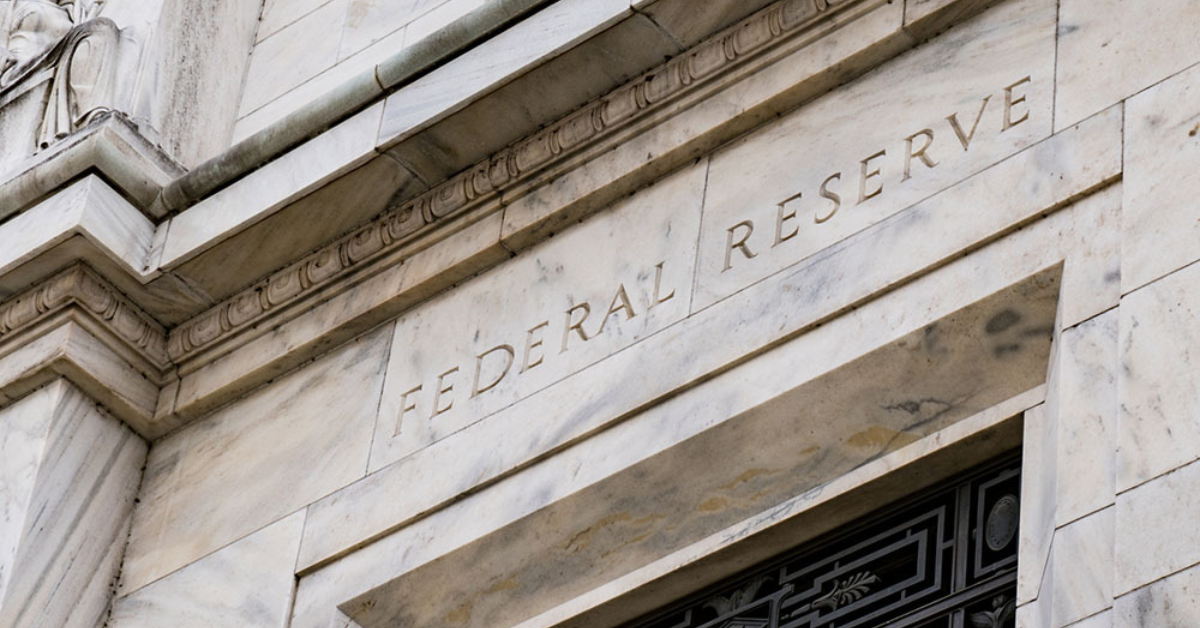
As I look at the current state of the U.S. economy in late 2025, it feels like we are watching a high-stakes poker game where the dealers, the players, and the pit bosses are all part of the same fraternity. We have been conditioned to believe that the Federal Reserve must remain a hermetically sealed chamber, guarded by high priests of finance. But after decades of boom-and-bust cycles, bailouts, and an ever-widening wealth gap, I’ve realized something fundamental: The Federal Reserve is an institution of bankers, by bankers, and too often, for bankers.
At The Central Forward Party, we believe in a “Third Way”-not the reflexive populism of the Right or the spending-heavy mandates of the Left, but a pragmatic restructuring of the institutions that hold the keys to our prosperity. It is time to crack open the doors of the Eccles Building and invite the rest of the American economy inside.
The Original Sin: The 2008 Bailout Fallacy
I often reflect on the 2008 financial crisis as a moment where we lost our way. At the time, the Federal Reserve and the Treasury acted with a singular, desperate logic: the “Too Big to Fail” doctrine. They poured hundreds of billions into institutions like Citigroup and AIG, fearing that a collapse would trigger a global dark age.
But if I had been at the table, I would have taken a different path. I would have let those giants go.
Instead of propping up bloated balance sheets with taxpayer life support, we should have covered the depositors’ losses, wiped out the shareholders who gambled on risk, and sold the banks off piecemeal to regional and community banks. By breaking the leviathans into smaller, manageable parts, we would have permanently reduced the systemic risk that still haunts us today. We traded a momentary panic for a decade of “moral hazard,” teaching the biggest banks that they could privatize their profits and socialize their losses.
The Composition Crisis: Where are the Builders?
The current Federal Reserve Board of Governors is legally required to represent the “financial, agricultural, industrial, and commercial interests” of the country. Yet, when you look at the resumes of the Board, they are almost exclusively occupied by academic economists and veterans of the banking industry.
I am deeply concerned that we have a central bank that speaks the language of derivatives but has forgotten the language of diesel and dust.
- The 50% Rule: We at Central Forward believe that bankers and financial theorists should make up no more than 50% of the Federal Reserve Board.
- The Industrial Voice: The remaining seats must be filled by leaders from the industries that actually build things: manufacturing, logistics, technology, and agriculture.
Why? Because a banker looks at an interest rate hike and sees “inflation control.” A manufacturer looks at that same hike and sees the death of a new factory or the inability to upgrade equipment. We need a Fed that weighs the “cost of capital” against the “cost of production.”
Here is the additional analysis, drafted to integrate seamlessly into your blog. It follows the first-person, op-ed style and uses the specific data points we discussed to solidify the “Central Forward” vision.
A Missed Opportunity for Resilience: The Counterfactual of 2008
Looking back at the debris of 2008, I am struck by how differently we could have handled the systemic risk. Instead of the $426 billion TARP injection that essentially rewarded the largest players for their “Too Big to Fail” status, we could have pursued a Regional Resilience Strategy. By moving the deposits and assets of failing giants into the hands of regional and community banks, we would have fundamentally decentralized our financial power.
Regional banks are the lifeblood of Main Street; they currently provide nearly one-third of all small business lending in the U.S. and were responsible for disbursing 25% of all PPP loans during the pandemic. Imagine if, in 2009, we had used the failing assets of a Wall Street titan to bolster five or six regional powerhouses. We would have created a more competitive landscape where no single failure could hold the global economy hostage, and where credit was managed by institutions that actually know the names of the business owners they serve.
Diversity as a Defense against Inflation: The 2022 Lesson
The value of an industrial-led Federal Reserve is perhaps most obvious when we look at the inflation spike of 2022. While the “banker-heavy” Fed was initially dismissing inflation as “transitory,” heads of manufacturing and logistics companies were seeing a different story in real-time. Supply chain bottlenecks and rising input costs were evident on the factory floor months before they appeared in the Consumer Price Index (CPI) data.
If our Board had been composed of 50% industrial leaders, the Fed would likely have seen the “persistence” of inflation as early as late 2021. Instead of waiting until March 2022 to begin the fastest tightening cycle in 40 years-hiking rates from near zero to over 5% in a matter of months-a more diverse board might have opted for a “soft-start” approach. By acting earlier and more gradually, we could have potentially avoided the extreme volatility that saw the Core PCE index climb above 5.5%, a shock that hammered middle-class savings and sent mortgage rates skyrocketing from 3% to 7% in a single year. Diversity at the Fed isn’t just about fairness; it’s about having better sensors on the economic dashboard.
The “Trump Effect”: Why Partisan Pressure Fails
As we navigate the second year of President Trump’s second term, we are seeing a dangerous new policy trend. The President has made no secret of his desire to see interest rates slashed “by a lot,” even as his own administration’s aggressive tariff policies (reaching effective rates not seen since 1910) threaten to spike the cost of consumer goods.2
This is a recipe for disaster. President Trump’s attempt to exert executive pressure on Chair Jerome Powell (or his likely successor in 2026) undermines the one thing that keeps the U.S. Dollar as the global reserve currency: credibility.
The President’s policy of “Low Rates + High Tariffs” is economically incoherent. High tariffs are inherently inflationary-they make the parts for your car and the food on your table more expensive. If the Fed then lowers rates to “help growth,” they are effectively throwing gasoline on an inflation fire. This isn’t a strategy for a strong economy; it’s a strategy for a “sugar high” followed by a crash that will hurt the middle class the most.
The Central Forward Perspective: Stability Through Diversity
A Central Forward administration would protect the Fed’s independence from the White House, but we would simultaneously end its independence from the real economy.
Imagine a Federal Reserve where the head of a major supply chain company sits across from a Goldman Sachs alumnus. When the banker suggests tightening the money supply, the logistics expert can point to the real-time shipping data showing that the economy is already cooling.
We don’t want a Fed that is a puppet of the President, nor do we want a Fed that is a protector of the Big Four banks. We want a Fed that is a mirror of the American workforce.
| Current Fed Structure | The Central Forward Vision |
| Dominated by Banking/Academic backgrounds. | Max 50% Bankers; remaining seats for Industry Leaders. |
| “Too Big to Fail” mindset. | Piecemeal liquidation of failing systemic banks to regional players. |
| Susceptible to Presidential “Rate Bullying.” | Statutory independence combined with Industrial oversight. |
| Focused on Financial Asset Prices. | Focused on Manufacturing Output and Wage Growth. |
Conclusion: Repairing the World of Finance
The world of finance is broken because it has become an island, disconnected from the mainland of American life. We pay for the bankers mistakes, we suffer from their blind spots, and we watch as our politicians try to turn the central bank into a political tool.
It is time for a Federal Reserve that looks like America’s industries, acts with the prudence of a community banker, and has the courage to let the giants fall so that the rest of us can rise. That is the only way to reduce our debt, protect our currency, and ensure that the next global crisis doesn’t leave the American taxpayer holding the bag once again.
Contact us today, and let us help you get started!