
There is a specific kind of financial absurdity that Washington has normalized so thoroughly that most people no longer see it. Let me put the numbers next to each other so the absurdity becomes visible.
A United States Senator earns $174,000 per year. The average cost of winning a Senate seat in the 2024 election cycle was $16 million. The federal budget that Senator will help manage totals $6.7 trillion. The nominal GDP of the economy whose tax and regulatory structure they will help shape is $32.4 trillion, the largest in the world.
The salary is 1.09 percent of the fundraising requirement. It is 0.0026 percent of the budget being managed. By any comparative professional standard, it is not a salary calibrated to the responsibilities attached to it. And the consequences of that miscalibration are not abstract. They are measured in the $36 trillion national debt, the $1.8 trillion fiscal year 2026 deficit, and the chronic donor-driven legislative dysfunction that has prevented structural reform across administrations of both parties.
What Lee Kuan Yew Understood
Lee Kuan Yew, the founding Prime Minister of Singapore, made this argument directly and implemented it systematically. He said that if you want top people leading your country, you must pay them wages commensurate with their responsibilities. And if you want them to stop stealing from you, you must pay them enough that the financial risk of losing the position from engaging in corruption exceeds the financial gain from the corruption itself.
Singapore implemented this principle starting in the 1980s. Ministerial salaries were benchmarked against comparable private sector compensation. The Corrupt Practices Investigation Bureau was simultaneously strengthened to ensure accountability. The result is visible in every comparative governance metric. Transparency International’s 2024 Corruption Perceptions Index ranked Singapore fifth globally out of 180 countries. The United States ranked 24th. That 19-rank gap is not a cultural difference. It is a structural one.
In 2026, Singapore continues to function as one of the most efficiently governed states in the world, with institutional trust levels that American governance cannot currently approach. The structural lesson transfers directly: adequate compensation paired with robust accountability produces better governance outcomes than inadequate compensation paired with inadequate oversight.
The 2026 Context: Why This Matters More Than Ever
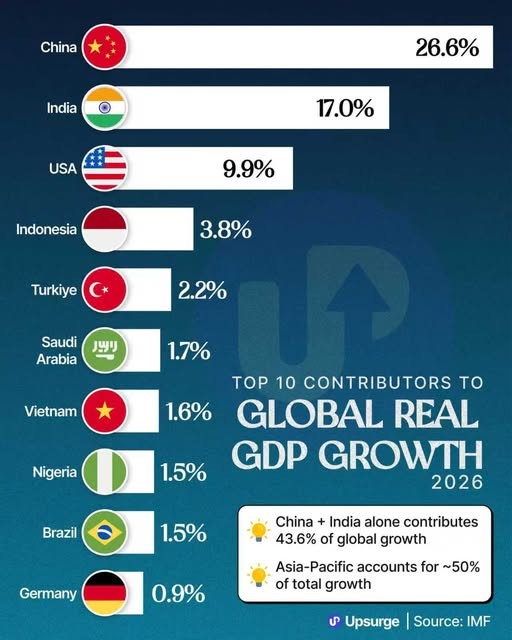
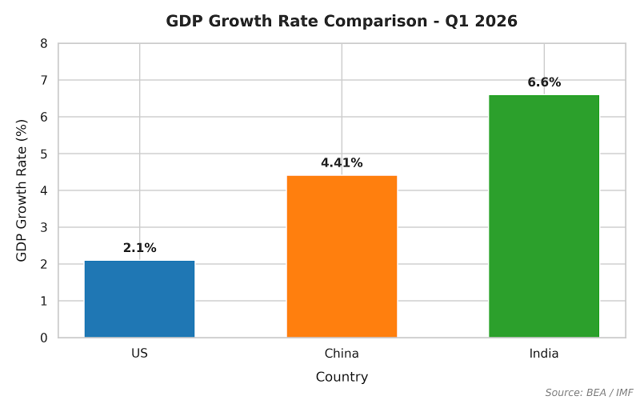
The United States economy grew at a 2.1 percent annual rate in the first quarter of 2026, according to the Bureau of Economic Analysis. China grew at 4.41 percent. India at 6.6 percent. China and India together account for 43.6 percent of global real GDP growth in 2026.
The geopolitical moment the United States faces in 2026 requires legislators with the expertise, independence, and institutional integrity to make sophisticated, long-range decisions about trade relationships, technology competition, defense posture, and fiscal management. Those legislators need to be able to say no to donor interests when those interests conflict with national ones. They need to be financially independent enough that the financial consequence of acting with integrity does not outweigh the financial consequence of compromising it.
At $174,000 against a $16 million fundraising requirement, that financial independence does not exist. At $1.25 million with recorded meetings and independent oversight, it begins to.
What the Current Salary Structure Actually Produces
The Trump administration’s management of the federal balance sheet in 2026 illustrates the governance quality problem directly. The CBO projects that the fiscal year 2026 deficit totaled $1.8 trillion in the first ten months. Tariff policy changed more than 50 times since January 2025, generating a $250 billion revenue shortfall from tariff and customs duty collections below earlier projections. The Supreme Court ruled in February 2026 that the administration lacked authority to impose tariffs under IEEPA, stripping the legal foundation of the primary tariff mechanism, adding an estimated $2 trillion in larger projected deficits over 2026 to 2036 compared to baseline.
These are the fiscal outcomes of a legislative and executive environment in which neither the legislators who were supposed to provide oversight nor the executive officials making the decisions were operating with sufficient independence from the financial relationships that compromise judgment.
The Center Forward Party’s Specific Proposal
The proposal is exact. Congressmen earn $750,000 annually. Senators earn $1.25 million annually. Every legislator receives dedicated Secret Service protection that records all meetings and calls in their official capacity. Those recordings are reported to an independent oversight body to confirm the absence of bribery, illegal arrangements, or inappropriate activities.
The fiscal math is direct. There are 535 members of Congress. At a blended average of approximately $1 million, the total annual cost is $535 million. Against a $6.7 trillion federal budget, that is 0.008 percent of annual spending. Against the $27 billion in documented annual rider waste, it pays for itself in a matter of weeks. Against the $250 billion tariff revenue shortfall in fiscal year 2026 alone, it is a rounding error.
The accountability structure changes the legislative environment in ways the salary increase alone cannot. When every meeting with a lobbyist is on the record and reported to an independent oversight body, the private conversation where the implicit or explicit arrangement gets made is no longer private. The mechanism through which donor influence converts into legislative outcomes is removed.
What This Means for US Competitiveness
The global economy in 2026 is distributing its growth in ways that make structural governance reform in the United States urgent rather than theoretical. China is investing in AI infrastructure, semiconductor fabrication, and clean energy manufacturing on timelines that extend decades into the future. India is signing bilateral trade agreements with the UK and EU, strategically repositioning itself to capture trade flows displaced by US tariff chaos. The Eurozone, while growing slowly, maintains institutional governance standards through the European Central Bank and independent fiscal councils that provide stability and credibility that US governance currently lacks.
The United States contributes 9.9 percent of global real GDP growth in 2026. It is still the world’s largest nominal economy at $32.4 trillion. But the trajectory is visible. Closing the governance quality gap with its competitors requires the structural reforms that the Center Forward Party is advancing, starting with the compensation and accountability framework that makes legislative integrity financially rational.
The Electoral Lever
The Center Forward Party will run candidates against any incumbent who opposes this reform. The campaign question writes itself: if you oppose a system that pays you a genuinely competitive salary and holds you accountable for who you meet with in the exercise of your public duties, what exactly are you protecting?
The American public already has an answer to that question. Congressional approval has averaged below 25 percent for over a decade. The 45 percent who call themselves political independents, a record high in 2025 according to Gallup, are not satisfied with the current arrangement. The Exhausted Majority is looking for a political vehicle that takes this problem seriously and offers a specific, structurally credible solution.
The Center Forward Party is that vehicle. Join us at thecenterforwardparty.com and reach out here.