
I want to ask you to do something before we get into the data and the policy. I want you to think about the last private meeting you had where the outcome mattered to someone else, and whether the fact that it was private changed how honest you were.
Most people, if they are honest, will admit that privacy changes behavior. Not because most people are corrupt, but because accountability is a structural force, not a character trait. We are more likely to behave consistently with our stated values when we know our behavior is observable. That is not a criticism of human nature. It is just how human nature works.
Now apply that observation to the 535 members of Congress who collectively manage a $6.7 trillion federal budget in meetings that are almost never recorded, almost never disclosed in real time, and almost never subject to any independent verification of what was actually discussed or agreed upon.
How Much Do We Actually Know About What Happens in These Meetings?
Less than you would think, for an institution this powerful.
Lobbying disclosure is required under the Lobbying Disclosure Act of 1995. Registered lobbyists must file reports every six months listing their clients, the issues they worked on, and the amounts they were paid. In the 2023 cycle, total registered lobbying expenditure exceeded $4.2 billion according to OpenSecrets.
What is not disclosed is what was actually said in the meetings those billions of dollars paid for. The disclosure tells you that a pharmaceutical company paid a lobbying firm $3 million to work on drug pricing legislation. It does not tell you what the lobbyist offered, what the legislator agreed to, or what language ended up in a bill as a result of that conversation.
That gap between what is disclosed and what actually happened is where congressional corruption lives.
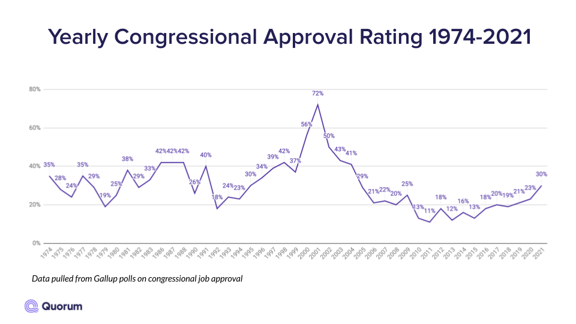
[Congressional oversight and accountability mechanisms — the structural gaps that allow private meetings to serve donor interests unchecked. Source: Congressional oversight research]
I know what happens inside that gap from personal experience. As I have written previously, I was personally asked twice, in completely different industries and decades apart, to pay a government official a percentage of a contract value in exchange for favorable treatment. Both conversations happened in private, with no recording, no witnesses who would come forward, and no external accountability structure that made the proposal feel risky to the person making it.
Both men eventually went to prison, but only because somebody eventually came forward. How many similar conversations happen every year and never reach that point?
What Does Recording Congressional Meetings Actually Mean in Practice?
The Center Forward Party’s proposal is precise. Every Senator and every member of Congress receives Secret Service protection as part of the congressional salary reform. That protection detail records all meetings and calls conducted in the legislator’s official capacity. Those recordings are reported to an independent oversight body whose sole mandate is to confirm that no bribes are being solicited or accepted and that no illegal or inappropriate activities are occurring.
This is not wiretapping the private lives of elected officials. It is extending the same accountability infrastructure to public servants’ official conduct that already applies, in various forms, to law enforcement officers through body cameras, to financial advisors through call recording requirements, and to publicly traded company executives through SEC disclosure rules.
If a legislator’s official meeting with a lobbyist cannot survive being on the record, that is not an argument against the recording. That is an argument for it.
What Would Change If Legislators Knew Every Meeting Was Recorded?
The short answer is: behavior. The longer answer involves understanding why corruption persists at the structural level despite public outrage about it.
Corruption in the legislative context is not primarily about individual bad actors, though those exist. It is about a system that creates private spaces where exchange of value for legislative favor becomes the default operating mode. The HUD official who asked me for 10 percent of my contract value was not operating unusually within his professional context. He was operating as his incentive structure had trained him to operate. Remove the private space. Remove the unobservability. The conversation changes fundamentally.
Here is what changes in practical terms when meetings are recorded and independently reviewed:
- The lobbyist who arrives with a bill pre-drafted cannot also arrive with an implicit financial offer, because the conversation is on record
- The legislator who has accepted campaign contributions from an industry cannot take a private meeting with that industry’s lobbyist on related legislation without that meeting being documented
- Riders attached to bills at the last minute, after private conversations with interested parties, become traceable to specific meetings that can be reviewed
- The pattern of which legislators meet most frequently with which industries becomes visible data rather than opaque inference
None of this requires prosecuting anyone. The deterrent effect of observable accountability changes behavior before the misconduct happens, not after.
Is This Constitutional?
The Fourth Amendment protects citizens from unreasonable government searches. But legislators are government officials, and their official conduct in the performance of their public duties has always been subject to a different constitutional analysis than their private lives. Federal employees in sensitive positions are already subject to extensive monitoring of their official communications. Intelligence officials operate under oversight frameworks that include recording and review of their work-related activities.
The legal question is not whether Congress can be made accountable for its official conduct. It is whether any existing institution has the political will to impose that accountability. The answer so far has been no, because the people who would have to impose it are the people it would constrain.
That is precisely why the Center Forward Party’s approach is electoral rather than legislative in the first instance. You build the bloc that holds the balance of power, and then you make this reform one of the conditions of your support for any legislative agenda. At that point, the political will exists because the political math requires it.
What Does Singapore Tell Us About This Kind of Reform?
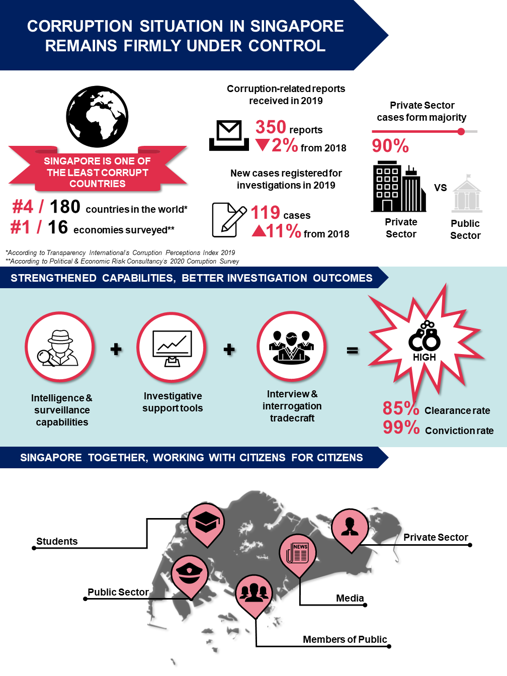
[Singapore anti-corruption framework and Transparency International ranking — consistent top-tier performance tied to transparent accountability structures. Source: Transparency International CPI]
Singapore’s anti-corruption record is one of the most studied governance outcomes in the world. Transparency International’s Corruption Perceptions Index consistently ranks Singapore in the top five globally, against a backdrop of much larger and more complex economies that fail to come close.
The foundation of that record is not cultural. It is structural. Singapore dramatically increased ministerial and civil servant salaries starting in the 1980s, pairing those increases with a strict accountability framework under the Corrupt Practices Investigation Bureau that investigates any allegation regardless of rank. The combination of genuine financial security in the role and credible certainty of investigation for violations changed the behavioral calculus fundamentally.
The Center Forward Party’s proposal applies exactly the same structural logic. High enough salary that financial independence is real. Oversight credible enough that corruption is not just illegal but practically traceable. The combination works because it addresses both sides of the corruption equation simultaneously.
The Case for Joining Us
The reason most Americans have stopped believing the system can be fixed is not cynicism. It is pattern recognition. They have watched reform promises enter Washington and get absorbed by the same donor-driven, private-meeting-dependent machine that produced the problem in the first place.
The Center Forward Party is not promising to be a better version of that machine. It is proposing to change the machine itself, starting with the specific structural condition that makes corruption easy: the unobservable private meeting where the actual bargain gets made.
If you believe that public servants conducting public business should be publicly accountable for how they conduct it, then this proposal is not radical. It is overdue. Join the movement here.
Frequently Asked Questions
Q1) Would legislators retain any privacy rights under this proposal?
The recording applies to official capacity meetings and calls conducted as part of their legislative duties. Personal and family life is entirely outside the scope of the proposal. The distinction between official conduct and private life is legally well-established across other federal contexts.
Q1) Who has access to the recordings?
The independent oversight body tasked with reviewing them for signs of bribery or illegal activity. Recordings are not public by default. They become evidentiary only when the oversight body identifies a potential violation and initiates a formal investigation.
Q3) Would this deter qualified people from running for office?
People who are deterred by the prospect of having their official meetings on record are, by definition, people who intend to have official meetings they would not want on record. That is a feature, not a flaw.
Q4) What prevents the oversight body from leaking recordings for political purposes?
The enabling legislation would include strict criminal penalties for unauthorized disclosure, independent inspector general oversight of the oversight body itself, and clear legal protocols for access, storage, and destruction of recordings. No system is leak-proof, but the legal and structural deterrents are substantial.
Q5) Has any government piloted a similar system?
Body camera requirements for law enforcement, mandatory call recording for regulated financial advisors, and SEC disclosure requirements for executive communications all operate on the same structural principle. The extension to legislative conduct is a logical next step, not a precedent-free experiment.