

There is an assumption so deeply embedded in American political culture that almost nobody examines it critically. It is this: paying our politicians less is a form of discipline. It keeps them humble. It prevents them from getting too comfortable. It signals that public service is a calling, not a career.
It is a beautiful sentiment. It has also produced a Congress where the median net worth exceeds $1 million, where the average cost of winning a Senate seat is $16 million against a salary of $174,000, and where the documented annual cost of corruption-driven legislative waste runs into tens of billions of dollars.
The penny-wise instinct to keep congressional salaries low is costing us more than almost any line item in the federal budget. And the fix is counterintuitive enough that most politicians will not touch it: pay them significantly more, watch them significantly more closely, and watch the financial incentive for corruption disappear.
Why $174,000 Is Actually a Poverty Wage for This Job
That sentence will make some people angry, so let me explain precisely what I mean.
$174,000 is a strong income by the standard of the American household. The median household income in the United States in 2023 was approximately $80,000 according to the U.S. Census Bureau. A congressional salary of $174,000 is more than twice that.
But the relevant comparison is not to the American household. The relevant comparison is to the financial reality of the job itself.
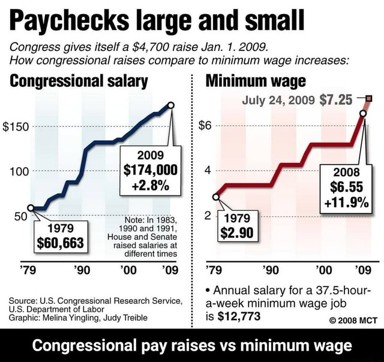
![Congressional salary at $174,000 versus average cost of winning a House or Senate seat — the structural gap that makes donor dependence inevitable. Source: OpenSecrets / Princeton Policy Advisors]
According to OpenSecrets, the average cost of winning a House seat in the 2024 cycle was $2.5 million. The average Senate race cost $16 million. A legislator who earns $174,000 per year and serves two terms in the House earns $348,000 in total salary against the $2.5 million minimum they needed to get there. The math creates an unavoidable financial dependence on external funding sources, which means an unavoidable accountability to those sources that directly competes with accountability to their constituents.
The lobbyist industry, which exists to represent those funding sources inside the Capitol, paid its members a median of $124,000 in 2023 according to the Bureau of Labor Statistics. Senior lobbyists at major firms earn $300,000 to $500,000. The people whispering in our legislators’ ears about how to vote on legislation earn more than the legislators themselves. That structural reality determines outcomes in ways that no individual legislator’s good intentions can fully overcome.
What Did Lee Kuan Yew Understand That Washington Does Not?
Lee Kuan Yew, the founding Prime Minister of Singapore and one of the most consequential governance reformers of the twentieth century, made a simple argument about public sector compensation that the results have since validated comprehensively.
He argued that if you pay ministers and senior civil servants below market rates, you guarantee one of two outcomes: either you attract people who are less capable than the private sector alternatives they gave up, or you attract people who intend to compensate the salary gap through corruption. The only way to attract and retain genuinely capable people and ensure their honesty is to pay them enough that the salary itself is worth protecting.
Singapore implemented this principle starting in the 1980s. Minister salaries were set at benchmarks tied to comparable private sector compensation. The Corrupt Practices Investigation Bureau was strengthened simultaneously to ensure that the accountability side of the bargain was enforced. The results are visible in every major governance metric.
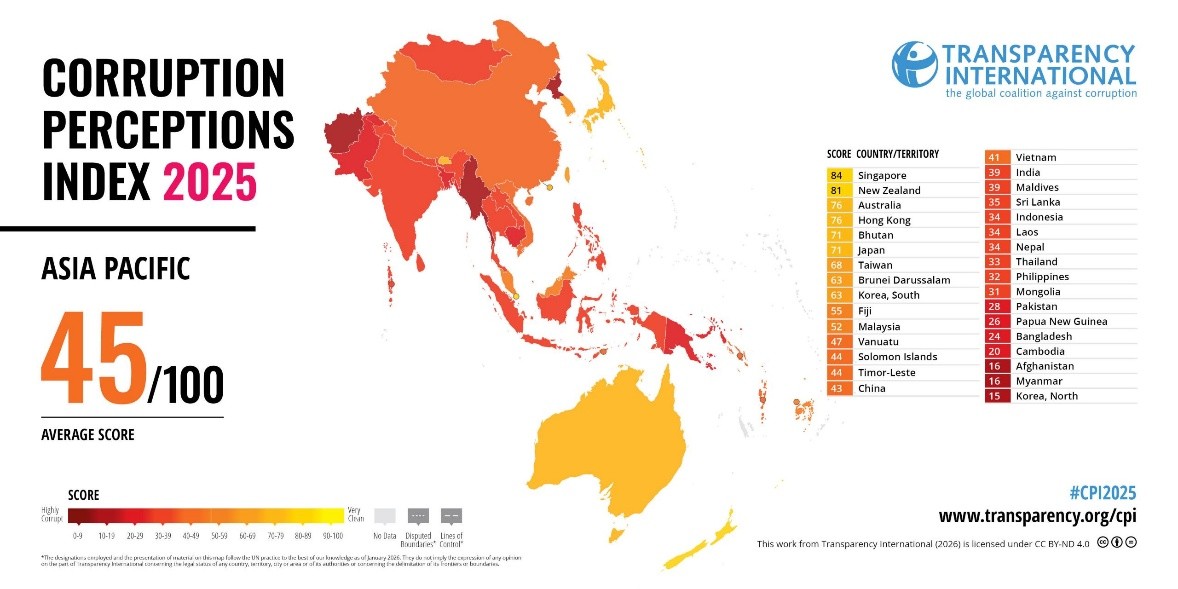
![Singapore’s Corruption Perceptions Index ranking — consistently top five globally, tied structurally to compensation and accountability reforms initiated in the 1980s. Source: Transparency International]
Transparency International’s 2024 Corruption Perceptions Index ranks Singapore fifth globally out of 180 countries. The United States ranks 24th. That gap is not explained by cultural differences. It is explained by structural ones.
What Is the Center Forward Party Actually Proposing?
The proposal is specific. House members receive $750,000 annually. Senators receive $1,250,000 annually. Every legislator receives Secret Service protection that records their official meetings and calls, reported to an independent oversight body to confirm that no bribes are being solicited or accepted.
The fiscal math is direct. There are 535 members of Congress. At a blended average salary of approximately $1 million, the total annual cost is $535 million. The federal budget is $6.7 trillion. That is 0.008 percent of federal spending.
Against that cost, set the documented $27 billion in annual congressional rider waste tracked by government accountability bodies, and my own estimate, based on decades of direct exposure to government procurement, of over $100 billion annually in preventable corruption-driven waste across contracting and legislation. A $535 million investment that closes a $27 to $100 billion annual hemorrhage is not a hard business case to make.
The full salary and accountability proposal is explained on the Why Paying Politicians More Can Improve Integrity page on this site, and I would encourage you to read it in full if you want the detailed arithmetic.
Does Higher Pay Actually Reduce Corruption? The Evidence Says Yes.
The academic literature on this question is more consistent than the political debate suggests. A 2009 study published in the American Economic Journal by Ferraz and Finan examined Brazilian municipal politicians and found that higher wages were associated with significantly higher quality candidates and lower corruption. A 2013 study by Fisman, Schulz, and Vig examining Indian state legislators found similar patterns. A broader cross-national study by Van Rijckeghem and Weder found a statistically significant negative relationship between civil servant wages relative to private sector alternatives and corruption levels across developing countries.
The mechanism is not complicated. When the salary is large enough that losing the position is a genuine financial setback, the risk-reward calculation on accepting a bribe changes. When the accountability structure makes detection credible, the same calculation changes again. Both conditions together produce the behavioral outcome the public wants.
Here is what the current system actually looks like from a behavioral economics standpoint:
- A legislator earns $174,000 but needs $2.5 to $16 million to get and keep the job
- Private meetings with lobbyists are unrecorded and largely undisclosed in real time
- The financial gap between official salary and campaign requirements creates structural dependence on donor relationships
- The unobservability of official meetings creates a private space where that dependence gets converted into favorable votes and bill language
- No annual outcome review exists to flag legislation that reflects donor interests over public interests
Change any one of those five conditions and you improve the outcome. Change all five simultaneously and you have changed the system.
Why Both Parties Oppose This Reform
I want to be direct about why neither the Republican nor the Democratic party will propose this reform, even though the logic is sound and the evidence supports it.
Both parties have built their power structures around the existing financial ecosystem. The fundraising machine, the SuperPAC relationships, the lobbyist networks, the revolving door between congressional staff and lobbying firms, these are not bugs in how both parties operate. They are features. They are how elections get won and how influence gets maintained.
A reform that makes legislators financially independent of that ecosystem is a reform that makes the party apparatus less powerful relative to the individual legislator. And a reform that records every official meeting makes the relationship between legislative outcomes and donor investment transparent in ways that would be deeply uncomfortable for both parties’ incumbents.
Neither party will introduce this reform from a position of power. It has to come from outside the existing power structure entirely. That is exactly what the Center Forward Party is built to provide.
The Cost of Not Doing This
The national debt just crossed $39 trillion. Interest payments will exceed $1 trillion this year. The Congressional Budget Office projects those payments will double by 2035. A significant and traceable portion of that debt is the compounding result of decades of legislation drafted to serve donor interests rather than fiscal ones, passed without independent cost review, and never checked against outcomes after the fact.
The $535 million annual cost of the salary reform is real. So is the $39 trillion cost of the system it is designed to replace. The question is not whether we can afford to fix this. The question is whether we can afford to keep not fixing it.
Join the Center Forward Party and help us build the centrist bloc that finally makes this case from inside the legislative chamber rather than shouting it from outside.
Frequently Asked Questions
Q1) Why would raising salaries help if corrupt legislators can already get rich through other means?
The salary increase is paired with the accountability structure. The combination closes both the financial motivation and the practical mechanism for corruption simultaneously. The salary alone is insufficient. Both elements are required.
Q2) What prevents a future Congress from reversing the salary increase?
Nothing legally. But a salary increase of this magnitude, paired with visible accountability improvements and measurable reductions in documented waste, builds its own political constituency. Reversing a popular reform that is demonstrably saving the government billions per year is politically difficult.
Q3) Doesn’t this set a precedent for paying all government employees more?
The argument is specifically about the legislator’s unique position as the person responsible for the entire framework within which all government spending decisions are made. The structural corruption risk at that position justifies a specific compensation intervention that does not automatically apply to every federal role.
Q4) Would this attract better candidates?
Yes, and that is one of the secondary benefits. At $174,000, a highly qualified economist, healthcare executive, or technology leader takes a substantial pay cut to run for office. At $750,000 or $1.25 million, the financial sacrifice is significantly reduced, broadening the talent pool in ways that benefit governance quality independent of the corruption prevention argument.
Q5) Is the Singapore model directly applicable to the U.S. context?
The specific salary benchmarks differ given the scale difference between the two governments. The structural principle, that salary adequate for genuine financial independence combined with credible accountability enforcement produces better governance outcomes, transfers directly and is supported by evidence from multiple countries beyond Singapore.