
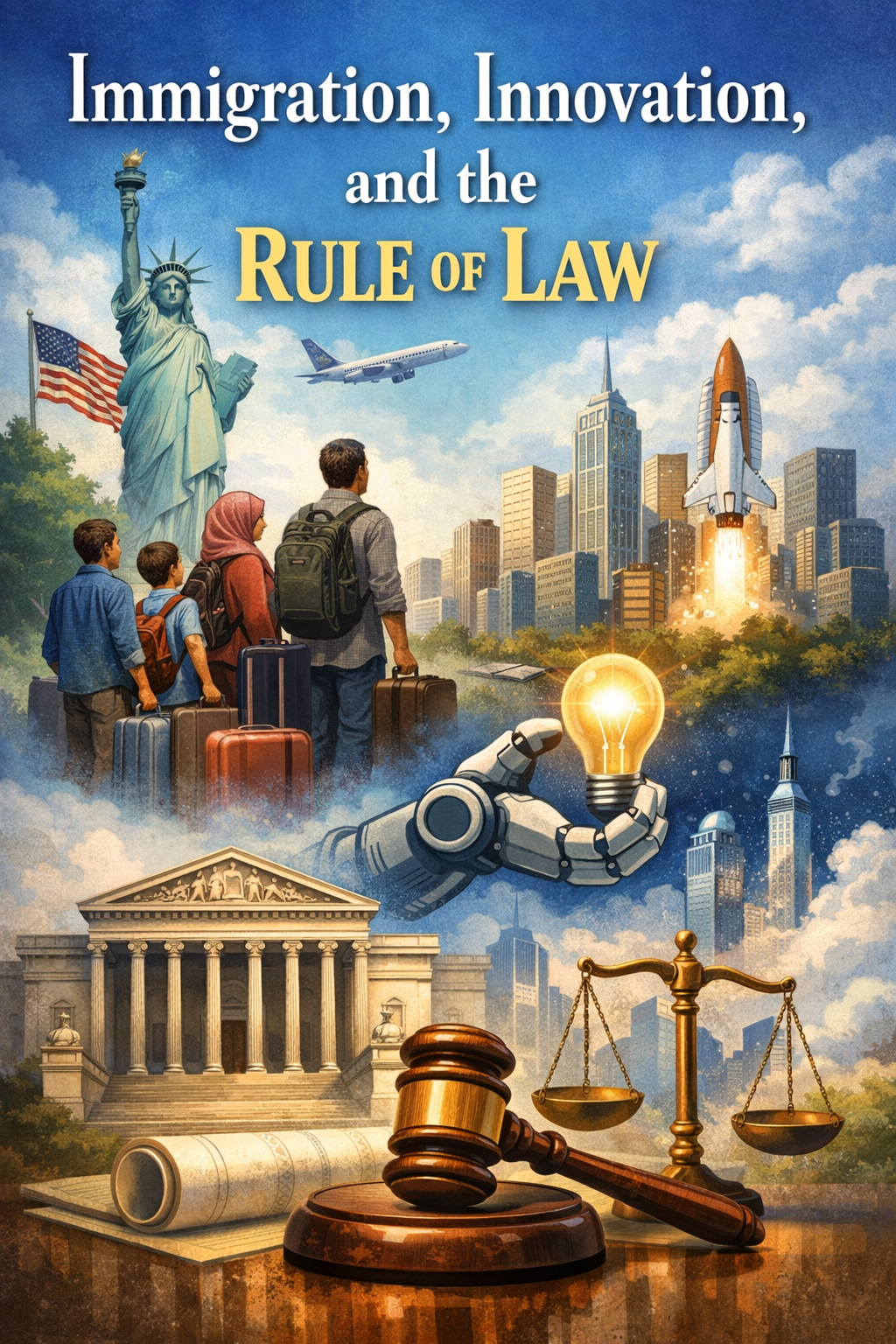
1. America Is a Nation of Immigrants
Every American—directly or indirectly—comes from immigrants. Today, nearly 45 million immigrants live in the United States, representing about 13.5% of the population. Immigrants have always played a vital role in our success.
They disproportionately perform difficult, low-paying jobs that many Americans are unwilling to do. Immigrants make up approximately:
- 30% of agricultural workers
- 25% of construction labor
- 20%+ of food service and caregiving workers
These workers help keep essential industries functioning and prevent sharp increases in food, housing, and service costs.
Immigrants also come to our universities to study, innovate, and build new ideas. International students alone contribute over $40 billion annually to the U.S. economy and support more than 350,000 American jobs. Many stay because of the opportunity and quality of life America once uniquely offered. That advantage is now at risk.
2. Why Talent Matters
As Lee Kuan Yew famously observed, China has roughly one billion people, but the United States effectively has access to the entire world. Our strength has never been population size—it has been our ability to attract the best minds globally and give them the freedom to succeed.
The data confirms this:
- 55% of U.S. billion-dollar startups were founded by immigrants or their children
- Immigrants account for roughly 25% of all U.S. patent holders
- Over 40% of Fortune 500 companies were founded by immigrants or first-generation Americans
This global talent advantage is not incidental—it is foundational to American economic leadership.
3. The Damage Being Done
Recent policies have directly undermined this advantage.
- Attacks on American universities have made it harder—and more intimidating—for international students and researchers to apply or remain in the United States.
- As a result, many of these students are now choosing England, France, and Germany, all of which are actively expanding student visas and offering clearer paths to residency.
- International student enrollment in the U.S. has stagnated, while Europe and Canada are experiencing double-digit growth.
- Each lost STEM graduate represents millions of dollars in lifetime economic output that will now benefit competing nations.
We are losing an extraordinary pipeline of intelligence, innovation, and entrepreneurship that helped make the United States the envy of the world. Once lost, this advantage will take years—if not decades—to recover.
Do we honestly believe America would have been as successful without immigrants driving innovation, science, and business?
4. Undermining Research and Progress
At the same time, critical university research departments—especially those studying disease, medicine, and advanced science—have been weakened or dismantled.
University research is not theoretical—it is economic infrastructure:
- Every $1 invested in federally funded research generates an estimated $2–$3 in long-term economic output
- Medical research alone saves billions of dollars annually by reducing future healthcare costs
- Much of this research is conducted by graduate students and researchers who are foreign-born
Weakening this system directly harms public health, national security, and long-term economic growth.
5. A Smarter, More Deliberate Immigration System
We strongly support welcoming immigrants back—but with a system that is deliberate, lawful, and humane.
Data consistently shows that immigrants—especially those with legal status—are less likely to commit violent crime than native-born citizens and are net contributors to the economy over time.
6. Amnesty With Accountability
We support creating an Amnesty Program for people currently living in the United States that provides a clear path to legal status and citizenship.
Legalization is not only humane—it is fiscally responsible:
- Legalized workers earn more and pay more in income and payroll taxes
- Past legalization programs generated tens of billions of dollars in additional tax revenue
- Bringing workers into the legal economy strengthens Social Security and Medicare funding
Eligibility requirements should include:
- No serious criminal record
- Minor offenses such as traffic violations should not be grounds for deportation
- Proof of employment or consistent work history
- Compliance with tax and residency requirements
7. Stronger, Lawful Entry Standards
We also support stricter, more effective systems for legal entry—because prevention is cheaper than enforcement.
- Pre-entry verification
- E-Verify conducted in the applicant’s home country as part of the visa or citizenship process
- Embassy-based applications
- Applicants must apply through U.S. embassies
- Embassies must be properly staffed to research applications and conduct thorough background checks
- Visa background checks
- Any visa longer than 30 days should require a full criminal background check
- Applicants with serious criminal convictions should be denied entry
Up-front screening costs far less than detention, deportation, and court backlogs, which currently cost taxpayers billions of dollars each year.
8. Border Enforcement That Respects the Constitution
We support adequate staffing at the border—but enforcement must follow the law.
Border and immigration agents must:
- Comply fully with the Constitution and the Bill of Rights
- Never enter homes without a judicial warrant
- Be prohibited from wearing masks
- Wear body cameras at all times
- Not detain individuals without specific, documented evidence that:
- The person is in the country illegally and
- Has been convicted of a serious crime (not a misdemeanor)
Civil-rights violations lead to lawsuits, settlements, and mistrust—costing taxpayers hundreds of millions of dollars over time. Constitutional enforcement is not only moral; it is fiscally responsible.
Any agent who violates these rules should face criminal charges. If convicted, they should serve a mandatory minimum sentence of five years. Those entrusted with enforcing the law must be held to the highest legal standards.
9. The Wall Is Not the Answer
A physical wall is an outdated and ineffective solution.
- It costs tens of billions of dollars to build and maintain
- Nearly half of undocumented residents entered legally and overstayed visas
- Walls do not address modern migration patterns or labor demand
Even China could not secure its borders with walls over 2,000 years ago. Modern immigration challenges require modern, lawful, and intelligent solutions—not symbolic ones.