The current administration’s trade policy, centered on massive tariffs, is based on a fundamental economic fallacy: the belief that taxing foreign goods will magically compel investments and manufacturing jobs to flood back to American shores. This approach is not a shrewd negotiating tactic; it is an economic misunderstanding that threatens the quality of life for the average American and shows a complete lack of understanding of modern international economics.
Tariffs are designed to appeal to a nostalgic vision of a 90% self-sufficient America—a vision divorced from the reality of globalized, technologically advanced trade. As centrists committed to data and fiscal prudence, we must expose this illusion and propose a sensible path forward.
The Self-Defeating Nature of Protectionism
The core mistake of the “Tariff First” strategy is its failure to account for the bedrock of American economic strength: consumer consumption, which supports approximately 70% of our entire economy.
The Laissez-Faire approach of the last 60 years successfully lowered the cost of goods—especially labor-intensive goods like clothing and electronics. This effectively increased the purchasing power of the middle and lower classes, allowing them to buy more and stimulating the economy.
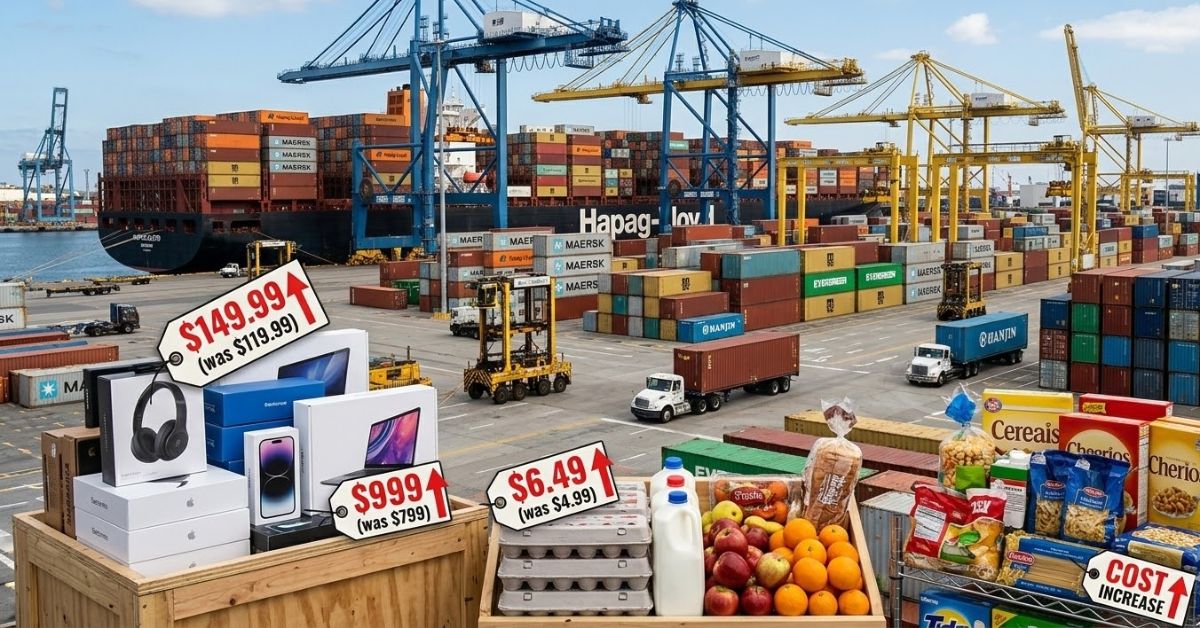
- Taxing the Consumer: Tariffs are simply taxes on imported products, paid by the American importer and passed directly to the American consumer. By raising the cost of basic goods, tariffs act as a regressive tax, slowing the primary engine of the U.S. economy.
- Failed Job Creation: Data from U.S. publications shows the negative trade-off. While tariffs are intended to protect domestic manufacturing, studies project that they slow GDP growth. The estimated cost to consumers for shifting each job to manufacturing exceeds $200,000 annually.
- Technological Irrelevance: Most labor-intensive jobs are slated to be replaced by automation within two decades. Forcing these jobs back now is an act of economic futility. For capital-intensive goods, the U.S. lacks the immediate capacity, and few will invest billions in new factories in an unstable, tariff-driven environment.
As analyses from the Tax Foundation and Yale’s Budget Lab show, the effective tariff rate paid by U.S. consumers is at its highest since the 1930s, proving that the economic pain is real.
The Resource Paradox: Natural Resources as Industrial Fuel
A critical flaw in the current narrative is the treatment of natural resources and raw materials. By placing heavy tariffs on Chinese imports, we are essentially starving our own high-tech factories of the fuel they need to compete.
- Buying China’s Natural Resources: The U.S. must maintain and even expand its ability to purchase China’s natural resources—specifically rare earth elements (REEs), graphite, and antimony. These are not “finished goods” that compete with American products; they are essential ingredients for American-made semiconductors, EV batteries, and defense systems.
- Strategic Access: By allowing the U.S. to buy more of China’s raw minerals at market rates, we lower the cost of production for American manufacturers. Taxing these inputs only makes “Made in America” products more expensive and less competitive on the global stage.
- The Extraction Gap: While we advocate for domestic mining, the reality is that permitting and infrastructure take decades. In the interim, cutting off access to Chinese resources through tariffs is a form of industrial sabotage.
The Fiscal Illusion: Trickle-Down Debt
The tariff approach mirrors another long-failed policy: “Trickle-Down Economics.” The belief that increasing the debt to provide massive tax cuts to the wealthy—who do not significantly alter their consumption habits—will be offset by tariff revenue is fundamentally flawed.
| Fiscal Policy | Key Actions | Result |
| Bush Sr. / Clinton Era (1990-2000) | Raised top tax rates. Al Gore’s REGO/NPR cut federal workforce by 377,000+. | Reduced the deficit from $290B to $0 by 1998; four years of budget surpluses. |
| Current Tariff/Tax Strategy | Massive tax cuts for corporations paired with aggressive new tariffs. | Increased national debt to over $28 trillion. Tariff revenue largely offset by slower growth. |
The Clinton-Gore success was rooted in progressive taxation (stimulating middle-class consumption) and surgical spending cuts, proving that measured centrist policy creates better economic outcomes.
The Path Forward: Pragmatism over Populism
We need to reject unilateral bullying. Threats and isolationism only encourage our adversaries to diversify their trade and our allies to step away, diminishing U.S. leverage. The rational solution is a return to a coalition-based strategy:
- Lead a Multilateral Coalition: The U.S. must approach China alongside NATO, Australia, Japan, and South Korea. This collective strength is the only language Beijing respects.
- Resource Security over Tariff Retaliation: Prioritize agreements that ensure a steady, un-taxed flow of Chinese natural resources into American factories. Use tariffs as a scalpel for intellectual property theft, not a sledgehammer for raw materials.
- Incentivize Diversification: Offer American companies triple tax deductions for moving production out of China and back to the U.S., or double deductions for moving to allied countries.
The Central Forward Party’s Vision
The Central Forward Party stands for pragmatic governance that protects the American consumer and ensures our industries have the raw materials they need to thrive. We believe in replacing thoughtless, unilateral aggression with coordinated, strategic enforcement. Our economy is too vast to be managed by the shallow, outdated tactics of protectionism. The time for rational, centrist leadership is now.