
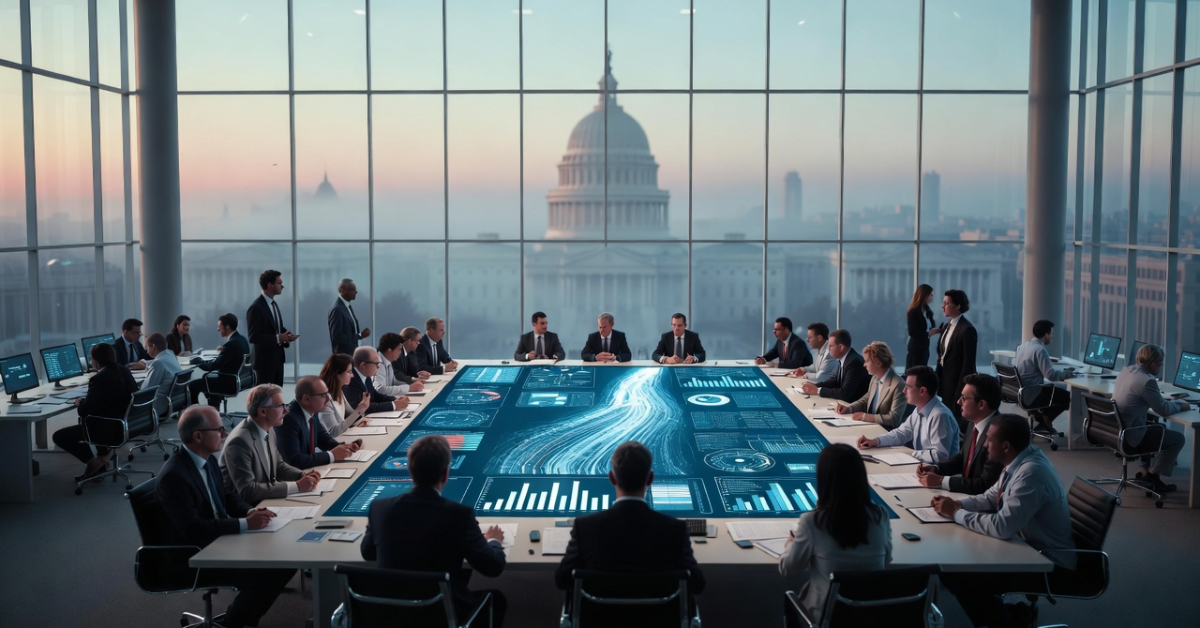
Congressmen and Senators should not draft bills. We need a department whose sole job is to look at the problems our country faces and design cost-effective solutions to solve them. These solutions need to be submitted to Congress for approval. I originally proposed this solution to reduce the cost to run the government . I have had two experiences trying to procure work from the government. In both cases they agreed to give me the work but wanted me to pay them 10% of the gross amount of the contract as a fee for giving me the project. They did not care how much I charged. One was when I was in my late 20’s. I owned one of the largest remodeling companies in Maryland. We did 1500 to 2000 jobs per year and $7 million in sales. This was 40 years ago. My office manager’s ex-husband was a lawyer in the political arena. She was able to get him to introduce me to the assistant secretary of HUD. When I met him, he agreed to give me Section 8 housing to build. He did not care how much I charged but required that he get 10% of the contract price. I decided to decline the offer, because I thought it was illegal. They both went to jail a couple of years later. The second was after I left the medical practice I was running when I first moved to California. I met several physicians that were black and I called my friends on the east coast. I had been very successful before I left Baltimore. I asked them if I could get some minority set aside work for Aids Testing. They were able to get me an appointment with the assistant secretary under Ronald Regan. I still have the Regan tie to prove it. Chris Cheaty (who was a physician), Dwight James ( who was a lawyer and a physician who did Medical Malpractice), and Carl Dickerson who owned an insurance brokerage firm that I did business with when I left the medical business, were in attendance. We had lunch in the White House. George Bush Senior was sitting at the table next to us while we were eating lunch. After lunch we went to a hotel (not the Willard) and discussed the work. They again agreed to give us the work. The black gentleman, who was Ronald Regan’s assistant, said he was allowed one deal as his going away gift and he would require 10% off the top to get the business. Again, he did not care what we charged.
My original solution was designed to address the graft in the system to reduce the cost of running the government by supervising and putting a control on the bills drafted by Congressmen and Senators. I have heard that some are drafted by lobbyists, but that is hearsay.
The reason this occurs in Congress is that as Marshall Mcuen said, “The Media is the message”. We all see how the rich guy with the fancy car and home gets the beautiful girl with the great figure. When Congressmen and Congresswomen see they can not only get this but also obtain the power and prestige that goes with their position their integrity goes out the window. We need to take the temptation away from them.
CHAT GPT said we lose $27 billion a year from riders Congress adds to bills. I believe we may be able to save as much as $100 billion if we do not allow people in the government including Congressmen and senators without supervision.
After Trump’s behavior since the first of the year, I realized that we need to make changes to the way we run our country to reinstate our place on the world stage as a valued partner. It has already cost us billions of dollars in trade per year. All our allies are looking for new partners to replace us, and we will never get all the business back. We now need to stop the bleeding by giving them confidence by putting in Guardrails to protect this from ever happening again.
I believe Trump’s comments about NATO and his threat to attack Greenland were not only a violation of our agreement with NATO but in theory could result in a war with a partnership that we created after World War 2. His comment that Nato has no value shows his lack of understanding of our world and the role NATO plays. NATO is probably the most significant organization (partnership) ever created. Putin clearly does not think NATO is worthless or he would not demand that Ukraine cannot join NATO. This also makes me wonder if Putin has something on Trump
Why did Trum agree that Putin did not interfere in his 2016 despite being told by his own people that they had conclusive evidence of his involvement in his 2016 election?
Why did Trump pull out the red carpet for Putin in Alaska and not do the same for Zalinski?
Why has Trump always told Ukraine that they must do what Putin wants?
Why is he doing Putin’s bidding by trying to tear down NATO?
By creating a non-partisan organization to supervise Congress, we will take away the financial incentive for our congressman and senators to vote for or against sensible solutions for Gun Control (open carry and semi-automatic weapons) and abortion rights (which increases the cost to run our government by increasing people on Medical and other Government Assistance programs). We will take away their ability to remain in power by accumulating more money by doing things that pay them to approve riders and bills that are not in the best interest of the American public., They will no longer hold onto a constituency by keeping or drafting bills that are not in the best interest of the country
I also believe we could reduce the cost of running our government by as much as a Trillion dollars by making Health Savings Accounts with a prescription benefit the Universal Health Care solution for businesses and for Medicare as well as let people on Welfare go to work without losing their welfare benefit. The question is implementation. I know it would work if everyone were on a Health Savings Accounts today but what do we do with people who are going on Medicare now. How do we transfer from the current system to a Health savings account? This will require us to make assumptions and monitor how accurate our projection was.
This is another reason why we need a non-partisan committee. Their job is to not only draft and review bills and amendments to see if they are likely to be successful and if the cost is reasonable for the goal it is intended to accomplish but to monitor the bills that are approved to make sure they are achieving their intended objective. They will submit amendments to these bills annually so they will be more successful in accomplishing their intended goal
I have owned 9 businesses over my lifetime and all but one became profitable. However, all had problems either at first or during the time that I owned them. This was either because I had made some false assumptions when I started the business or there were changes in the economy like Obamacare or changes in financial circumstances like recessions or excessive inflation. I had to modify the plan constantly. There is no system to do this in our current government. This will be even more true in the future because of the disruptive nature of AI.
We should allow people on Welfare to get jobs and keep their welfare benefit. The question is implementation and plan design. My original solution for Welfare was to let the recipients keep their welfare benefit and get a job at a rate that is 50% of the wage currently paid by the company for that position. This would increase profits for the company, which in turn would generate additional tax revenue. This would offset some of the cost of providing welfare. I also wanted to stop giving welfare recipients cost of living increases. This would allow us to inflate our way out of welfare. This would encourage people on Welfare to go to work.
In my original plan, their Welfare benefit would be reduced by 50% of their wages increase.
I would build mental hospitals and alcohol and drug rehabilitation centers like we had prior to Regan terminating them in the 80’s. Based on conversations I had with people who work with these people like Lutheran services only 50% can be helped. The other 50% suffer from disorders like bipolar and schizophrenia or are alcoholics and drug abusers. None of them want to go into a controlled environment. By getting rid of the coat of living components we will force them over time to enter these facilities which wll treat them and hopefully prepare some of them to get a job. This will also reduce homelessness in the United States.
The question is when do we stop giving people Welfare?
Then I started to think about how much Artificial intelligence is going to change our world.
I realized that our plan for Welfare should not be limited to people with income below 1.5 times poverty. It should also be to help those that lose jobs due to AI or in industries that are affected like Coal, and Oil and gas due to the environment.
Our current way of addressing issues is very static. We pass bills and just leave them alone. We must constantly monitor and review these bills to make sure we are maximizing our expected outcome and be prepared to make changes on a regular basis to maximize our return on investment.
Countries like China make plans as far out as 50 years. China is eating our lunch. We have no structure to do this.
Below is a list of key areas where China is either ahead or catching up quickly due to their ability to do long term planning (according to Chat GPT)
China now is ahead of us in:
- EV Batteries
- Ship Building and commercial Ship Building
- Rare Earth mining
- Solar
- Manufacturing Drones
- High speed rail
- Telecom Equipment The Global RAN Market
They are catching up in every other area because they have a central committee that plans long term not just for the next election cycle. I more detailed description is listed below
| AI (models, compute, ecosystem) | 🟦 US ahead | China is catching up fast in models, papers & open-source, but still behind in top compute & private investment. Financial Times+3Stanford HAI+3SCSP+3 | |
| 2 | Semiconductors (chips) | 🟦 US + allies ahead at cutting edge | China dominates mature/legacy nodes and total capacity, but is several years behind at advanced (7nm and below) logic fabs. Silverado Policy Accelerator+3Institute for Progress+3ITIF+3 |
| 3 | EVs & batteries | 🟥 China clearly ahead | China is not just ahead; it anchors most of the global EV + battery supply chain. US is trying to catch up from a smaller base. CEPA+4IEA+4IEA+4 |
| 4 | Shipbuilding (commercial) | 🟥 China clearly ahead | China is dominant by volume and orders; US is barely a player in commercial shipbuilding. RUSSPAIN.COM+3CSIS+3MarineLink+3 |
| 5 | Rare earths & critical-mineral processing | 🟥 China clearly ahead | China controls most mining and far more of the refining / processing, while the US is racing to lower dependence by ~2030. CSIS+4Polytechnique Insights+4Mining Technology+4 |
| 6 | Solar PV & clean-energy hardware | 🟥 China clearly ahead | China is the world’s main manufacturer and installer of solar; US is expanding but still far behind in hardware scale. InfoLink Group+4REN21+4EIA+4 |
| 7 | Telecom & 5G equipment | 🟥 China (Huawei/ZTE) ahead in gear | China’s vendors lead much of the global RAN market; US focuses more on chips/software and blocks Chinese gear at home. Reuters+5Telco Magazine+5Personal Tiger+5 |
| 8 | Drones (civilian/commercial) | 🟥 China clearly ahead | Chinese firms (esp. DJI) dominate consumer and many enterprise drone markets worldwide. AUVSI+2Flying Cars Market+2 |
| 9 | High-speed rail & big infrastructure | 🟥 China clearly ahead | China has the world’s largest HSR network and exports turnkey rail projects; the US has almost none at that scale. |
| 10 | Internet platforms, e-commerce & mobile payments | Mixed | US leads in global platforms (Apple, Amazon, Meta, etc.), but China is ahead in cashless society / super-apps (Alipay, WeChat Pay, etc.) inside its own market. |
1️⃣ Artificial Intelligence (AI)
Who’s ahead?
- US still leads at the frontier (biggest models, compute, private investment, top labs like OpenAI, Anthropic, Google, Meta, etc.). Stanford HAI+2SCSP+2
Where is China ahead or catching up?
- China leads in AI publications and patents and has a huge talent pipeline. Forbes+1
- Chinese models have closed most of the performance gap on common benchmarks; quality differences shrank sharply between 2023 and 2024. Stanford HAI
- In open-weight models, China has recently overtaken the US in download share (DeepSeek, Qwen, etc.). Financial Times
- But in compute, the US plus allies still control about three-quarters of global AI compute, with China around 15%. RAND Corporation
👉 Net: US ahead overall, but China is catching up fastest in model performance, open-source models, and deployment, while still constrained by chips and compute.
2️⃣ Semiconductors (chips)
Think of two layers:
- Cutting-edge logic (7nm, 5nm, 3nm, 2nm) – crucial for top AI chips
- Mature / legacy nodes (28nm, 40nm, etc.) – crucial for autos, industrial gear, power electronics
Cutting edge:
- US + allies (Taiwan, Korea, Japan, Europe) dominate advanced nodes; after quality adjustment, US + partners have ~35–38× more 7nm-and-better capacity than China. Institute for Progress+1
- China can produce some 7nm-class chips, but still several years behind in high-volume leading-edge logic and essentially stuck there by export controls on EUV tools. Economics Observatory+3ITIF+3National Defense Magazine+3
Mature nodes & overall capacity:
- China has the largest total semiconductor manufacturing capacity by volume and exports the most chips by quantity. Silverado Policy Accelerator+1
- Its mature-node capacity has grown over four times faster than global demand and is on track to be nearly half of all new mature-node capacity worldwide. USCC
👉 Net: US is well ahead at the bleeding edge, while China is ahead and still pushing hard at older nodes, packaging, and volume, and is trying to catch up at the frontier under heavy export controls.
3️⃣ Electric Vehicles (EVs) & Batteries
EVs:
- In 2024 almost half of all cars sold in China were electric, accounting for nearly two-thirds of global EV sales. IEA+1
- China manufactured about 12.4 million electric cars in 2024, over 70% of the world total. Al Jazeera
- The US and Europe are large markets but far smaller in absolute EV volume; US EV share is around 1 in 10 new cars vs >1 in 3 in China. IEA+1
Batteries & materials:
- China produces over three-quarters of batteries sold globally and more than 75% of lithium-ion battery cells, ~70% of cathodes and ~85% of anodes. IEA+1
- It also ranks #1 again in BloombergNEF’s lithium-ion battery supply chain ranking. BloombergNEF
👉 Net: This is one of the areas where China is clearly ahead across the whole stack (mines → refining → cells → EVs). The US is catching up, helped by subsidies and on-shoring, but from a much smaller base.
4️⃣ Shipbuilding
- China accounts for around 55% of global shipbuilding production and roughly 70% of new-build orders by some recent estimates. LinkedIn+2MarineLink+2
- South Korea and Japan are strong #2 and #3. The US is not a major player in commercial shipbuilding anymore; its strengths are mainly in military shipbuilding, which is a different market.
- China’s dominance comes from long-term industrial policy, cheap steel, lower labor costs, and massive yard capacity. MarineLink+1
👉 Net: In commercial shipbuilding China is well ahead, and the US is not really “catching up” here; instead, Washington leans on Korean/Japanese yards and focuses on military/naval capacity.
5️⃣ Rare Earths & Critical-Mineral Processing
- China produces about 69% of the world’s rare earth oxides and a much larger share of refined products. Polytechnique Insights+1
- It controls ~85% of refined light rare earths and essentially 100% of refined heavy rare earths, which go into magnets for EVs, wind turbines, and defense systems. Econofact+1
- The US and allies are investing heavily; one forecast says the US could meet 95% of its own rare-earth demand domestically by ~2030, but China may still supply about 60% of global magnet-grade material. Reuters+1
👉 Net: China is far ahead today, especially at the high-value processing stage. The US is narrowing vulnerability, not overtaking – more “catching up enough to be less dependent” than “taking the lead.”
6️⃣ Solar PV & Clean-Energy Hardware
- In 2024, China added around 329 GW of new solar capacity—more than half of global additions—and now holds roughly 55% of global installed PV capacity. Solar Power Europe+1
- China accounted for 60% of global solar PV capacity additions and about 47% of total installed capacity, plus 64% of solar PV jobs in 2023. REN21
- China exported nearly 236 GW of modules in 2024, up 13% YoY, underscoring its role as the world factory for solar hardware. InfoLink Group+1
- US additions and jobs are growing, but still small compared with Chinese volume. REN21+1
👉 Net: China is clearly ahead and still pulling further ahead in scale. The US is catching up somewhat on deployment, but in manufacturing, China remains dominant.
7️⃣ Telecom & 5G / Network Equipment
- Huawei and ZTE give China a huge share of the global telecom equipment market; Huawei alone has around 31% global market share in 2025, ahead of Nokia (14%) and Ericsson (smaller). IDN Financials+1
- Even outside China, Huawei remains the largest RAN vendor in most regions, despite bans in the US and some allies. Light Reading+2Telecom Lead+2
- US firms are stronger in chips, software, and services (e.g., Qualcomm, cloud providers), and Washington uses export controls and bans to limit Chinese equipment in sensitive networks. AP News+1
👉 Net: In pure hardware market share for 5G equipment, China is ahead. In underlying chips, software, and security influence, the picture tilts more toward the US and its allies—but China is not “catching up” here; it already leads on the equipment side.
8️⃣ Drones (civilian / commercial)
- Chinese-based companies, heavily subsidized, control about 90% of the consumer drone market, 70%+ of the enterprise market, and over 90% of drones used by US first responders. AUVSI+2Flying Cars Market+2
- DJI in particular has the overwhelming global market share in consumer and many prosumer segments. Flying Cars Market
- The US and Europe are trying to build “China-free” drone supply chains for defense and critical infrastructure, but starting from a big deficit. Reuters
👉 Net: This is a China-dominated sector today. The US is the one catching up, especially in secure / defense-use drones.
9️⃣ High-Speed Rail & Large-Scale Infrastructure
- China has built by far the world’s largest high-speed rail (HSR) network, thousands of kilometers long, and exports turnkey rail + infrastructure projects as part of Belt and Road.
- The US has very limited true HSR (tiny compared with China), and big rail/infra projects tend to be slower and more expensive.
- This is less about tech and more about scale, political system, and state-driven capital deployment.
👉 Net: China is already well ahead; there’s no serious US “catch-up” underway at comparable scale.
🔟 E-Commerce, Super-Apps, & Digital Payments
- US strengths: global tech giants (Apple, Amazon, Microsoft, Meta, Google, etc.), massive cloud infrastructure, and dominant mobile OS / app ecosystems.
- China strengths: incredibly deep domestic digital ecosystem — mobile payments and super-apps (WeChat, Alipay, Meituan, etc.) dominate daily life to a degree that far exceeds US cashless adoption.
- Because Chinese platforms are largely shut out of Western markets and vice versa, each side leads in its own “walled garden.”
👉 Net: Not a simple “ahead / behind.”
- Globally: US platforms have more worldwide reach and influence.
- Domestically: China is ahead in cashless society / super-apps, with near-universal mobile payments inside China.





Jason
This article raises a good point about modernizing how legislation is created. It feels like the current system is outdated.